

Your bike just died on the side of the road. You call for a tow and wait. Then the truck pulls up and the anxiety kicks in. Will they have the right equipment? Will they even know how to handle a motorcycle? These are not overreactions. They are legitimate concerns that plenty of riders have faced, and the answers matter more than most people realize.
This article breaks down exactly how tow trucks handle motorcycles, what can go wrong with the wrong setup, what proper motorcycle towing looks like, and what questions to ask before handing over your bike. If you are in Philadelphia and need help with transporting your motorcycle right now, Capstone Towing Company is available at 281-849-9991. Otherwise, keep reading because this information is worth having before the situation ever comes up.
Yes, a tow truck can tow a motorcycle, but the outcome depends almost entirely on the type of truck being used and the experience of the operator. Not every tow truck is equipped or set up to handle a two-wheeled vehicle safely. A flatbed truck, used correctly with the right tie-down equipment, is generally the appropriate setup for towing a motorcycle. A hook-and-chain or wheel-lift truck, on the other hand, is not well suited for the job.
Understanding the difference can save your bike from damage that has nothing to do with why it broke down in the first place.
Hook-and-chain tow trucks are largely outdated for towing most vehicles, and they are especially problematic for motorcycles. These trucks grab onto the frame or axle with a hook and drag the vehicle with two wheels still on the ground. For a motorcycle, this method can cause serious structural and cosmetic damage. Reputable operators rarely use this approach for bikes anymore, but it is worth knowing why it is a poor choice if it ever comes up.
Wheel-lift trucks work by gripping the front or rear wheels of a vehicle and lifting one end off the ground. This method works reasonably well for standard cars, but motorcycles have different geometry and weight distribution. A two-wheeled vehicle is not naturally stable when lifted at a single end, and securing it safely with this setup is genuinely difficult without additional equipment.
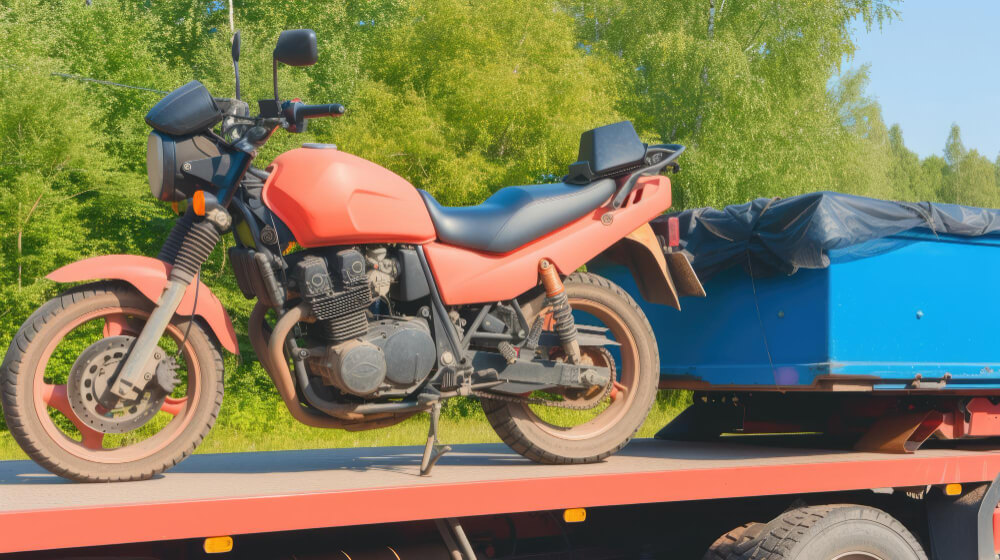
A flatbed tow truck is widely considered the safest option for motorcycles. The entire bike sits on a flat, stable surface for the full duration of transport. There is no dragging, no uneven lifting, and no awkward balancing. The motorcycle is secured using straps at specific anchor points, and everything travels as one solid unit. When riders ask whether a tow truck can tow a motorcycle without causing damage, the honest answer is: yes, when it is a properly equipped flatbed with an experienced operator behind it.
Even on a flatbed, things can go sideways if the operator does not know what they are doing. These are not unusual edge cases. Riders who have dealt with a poorly executed tow often report that the transport damage was worse than the mechanical issue that caused the breakdown.
Here are some of the most common problems:
Knowing what a proper tow setup looks like gives you a clear baseline when a truck shows up. There are two key areas to pay attention to: the equipment being used and the technique of the operator.
A flatbed equipped with a motorcycle wheel chock holds the front tire firmly in place from the moment the bike is loaded. This eliminates lateral movement during transit. Soft loop tie-down straps connect to the frame or handlebar ends rather than to any painted or plastic surface. The loading ramp should be wide enough to guide the bike up without risk of tipping.
An experienced operator compresses the suspension slightly before fully cinching the straps. This prevents the bike from bouncing against its own suspension travel on rough roads. The motorcycle should sit centered on the flatbed with weight distributed evenly from side to side. Once secured, the operator should check all four strap points before driving anywhere.
A well-executed motorcycle tow leaves the bike in exactly the same condition it was in when it got loaded.
You are allowed to ask questions before handing your bike over, and a knowledgeable operator will not be bothered by them. The answers will tell you a lot about what kind of service you are about to receive.
Before agreeing to a tow, ask the following:
These are simple, direct questions. Asking them costs nothing and can genuinely prevent avoidable damage.
Getting the motorcycle off the road is the first priority. Push or roll it as far onto the shoulder as possible, well clear of the travel lane. Turn on your hazard lights immediately. If you have road flares or reflective triangles in your gear, place them behind the bike to give approaching drivers enough warning distance.
Stay on the side of the motorcycle that faces away from traffic while you wait. Positioning yourself between the bike and oncoming vehicles is an unnecessary risk. Move behind a guardrail or onto the grass if either is available.
If visibility is low or it is getting dark, use your phone flashlight or put on any high-visibility gear you have with you. Being seen is the most important thing.
Can a tow truck tow a motorcycle? Yes, but the right truck, the right equipment, and a capable operator make all the difference. A flatbed with soft loop straps and a front wheel chock is the setup that protects your bike. Knowing what to look for and what to ask before any tow begins puts you in a far better position when something unexpected happens on the road.
If you ride in Philadelphia and find yourself stranded, Capstone Towing Company is reachable at 281-849-9991. Contact us before the situation becomes more stressful than it needs to be. We take motorcycle towing seriously, with the right equipment and the experience the job actually requires.